Two Fingers and a Nod: Learning the Secret Language Spoken Behind Our Bar
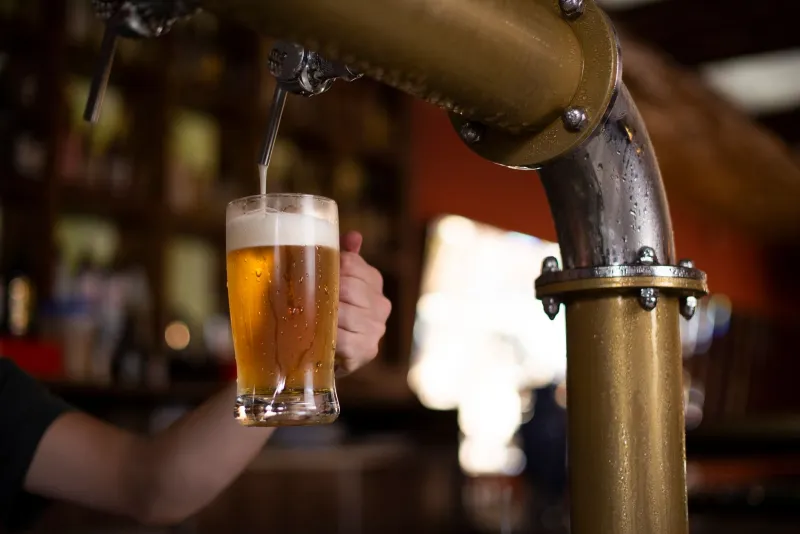
Stand at the end of our bar on a Friday evening and you'll see something that looks like chaos but is actually a language. A man in a flat cap raises two fingers. A woman by the settles says 'go on then' without looking up from her crossword. Somebody at the far end simply makes eye contact and tilts their head towards the guest ale pump. Nobody has ordered anything, and yet within ninety seconds everybody has a drink.
We thought it was time somebody wrote this down — partly for the curious, partly because our newest bar recruit, Ellie, has been with us four months and is only now fluent.
The Usual Is Not One Thing
The first thing to understand is that 'the usual' is a variable. It means a pint of Landlord for Doug from Downham, a small glass of the Malbec for Pat, and for young Sam from the farm it means a Coke, because Sam's the designated driver every single week and has been since his nan passed her taxi duties to him.
'You learn them the way you learn anything,' says Mick, who's pulled pints here longer than he'll admit. 'Repetition. Same faces, same times, same drinks. After a while you're not remembering orders, you're just recognising people.'
There's a hierarchy of shorthand, Ellie explains. The raised finger is the classic — one finger for one pint, and the brand usually doesn't need saying because most of our regular beer drinkers are creatures of habit. Two fingers doesn't mean two pints for the same person; it usually means them and their other half, who is probably already halfway to the corner seat by the fire.
Then there's the nod-and-point, the chin flick, and the most advanced form of all: the regular who walks in, catches the bar's eye, and says nothing at all. Their drink appears. That one took Ellie a while to trust.
When the Code Breaks
Here's where it gets interesting. What happens when a creature of habit changes habit?
'Panic,' says Mick, without a hint of joking. 'Doug asked for a lager one Tuesday and I checked he was feeling alright. Genuinely. It's like your postman delivering your post to next door.'
There's a protocol, we've realised. A regular breaking their own routine gets a raised eyebrow — a silent are-you-sure? — before the glass is poured. It's not nosiness, exactly. It's that after years of the same order, the order becomes part of the person. When Pat switched from red wine to a shandy one July evening, three separate regulars asked if she was poorly.
Sometimes the break is meaningful. When orders change after a bereavement, a new job, a health scare, the bar learns the new one quickly and quietly, without comment. That's part of the job that never makes the training manual.
Can a Visitor Crack It?
Short answer: they don't need to. The whole point of the code is that it exists for people we already know. A visitor who raises two fingers at Ellie will get exactly what a visitor should get — a friendly 'what'll it be?' and a proper recommendation.
But there is a path in, and it's shorter than you'd think. Come in three Thursdays running, sit somewhere sensible, be pleasant to the regulars, and by visit four you'll notice your pint being started before you've reached the bar. By visit six, you'll have a usual. Nobody announces it. It just happens, the way things do in villages.
The one warning: don't try the chin flick on your first visit. It never lands right, and it once caused a visitor from Wigan to be handed somebody else's pork pie, which is a story for another article.
Why We Bother
You could argue that in the age of app ordering and table service QR codes, all this shorthand is quaint and inefficient. You'd be wrong, but you could argue it.
The code is the service. It says: we know you, we've been expecting you, and your seat and your pint are both already yours. It's the difference between a bar and a pub, and it's why the same faces keep coming back through our door come rain, snow on the A59, or a Tuesday with nothing else on.
So if you're in and you see two fingers go up and a glass come down, know that you're watching a conversation. And if you fancy learning to speak it — well, the first lesson's on a Thursday, and the textbook is a pint of Landlord.